About Vehicles

Maruti Swift Desire Car
The Maruti Swift Desire, better referred to today as the Maruti Suzuki Dzire, is a popular compact sedan from Maruti Suzuki designed for Indian roads and daily driving needs. It is essentially the sedan version of the famous Swift hatchback but re-engineered to provide more boot space and comfort suited to families and long drives.
Under the hood, the Dzire typically comes with a 1.2-litre petrol engine that balances fuel efficiency and reliable performance. It’s paired with either a 5-speed manual gearbox or an AMT (automated manual transmission), giving drivers flexibility according to their preference. The engine delivers a smooth driving experience suitable for both city traffic and highway cruising.
The Dzire is a 5-seater sedan with compact overall dimensions (just under 4 metres in length), which helps it qualify for lower tax benefits in India. Despite its compact size, it offers a spacious interior, comfortable seats, and a larger boot compared to the Swift hatchback, making it practical for daily errands and luggage-heavy trips.
In terms of features, modern variants of the Dzire include a 7-inch touchscreen infotainment system with Android Auto and Apple CarPlay, cruise control, automatic air conditioning, and necessary convenience aids like power windows and keyless entry. Safety has been a priority — dual front airbags, ABS with EBD, and electronic stability support are offered on many variants. Higher trims may also feature rear parking sensors or a camera.
About Vehicles
Toyota Etios Car
The Toyota Etios is a compact car that Toyota developed with a strong focus on practicality, reliability, and spaciousness, especially for markets like India and other emerging economies. Featuring both sedan and hatchback (called Etios Liva) body styles, it was produced from 2010 to 2020 in India and became known for its rugged build quality and Toyota’s legendary durability.
Under the hood, the Etios typically comes with a 1.5-litre petrol engine that produces around 90 PS of power and 132 Nm of torque, paired to a 5-speed manual gearbox. There has also been a 1.36-litre diesel variant in some markets that offers higher mileage. Its suspension setup—MacPherson struts at the front and a torsion beam at the rear—along with an ample 170 mm ground clearance, makes it well suited for varied Indian road conditions.
One of the standout features of the Etios is its interior space. The design emphasizes generous cabin room and comfort, with a flat rear floor that allows easier movement and seating for three passengers. The sedan model offers an exceptionally large 595 litre boot, among the best in its class, making it practical for family use and luggage on long trips.
Toyota equipped the Etios with essential features to balance cost and comfort. Depending on the variant, it includes air conditioning with clean air filter, power steering (electric), power windows, central locking, and in higher trims steering-mounted audio controls, quality fabric upholstery, and alloy wheels.
Safety was also a focus: many models came with dual SRS airbags, ABS with EBD, immobiliser, and door-ajar warnings. These helped the car secure respectable safety ratings in crash tests.
About Vehicles
Maruti Ertiga Car
The Maruti Suzuki Ertiga is a popular 7-seater MPV (Multi-Purpose Vehicle) from Maruti Suzuki that’s designed to balance space, comfort, fuel efficiency and everyday usability—making it a strong choice for families and groups in India. It’s known for its practical design and reliable performance in city traffic as well as on longer highway drives.
At the heart of the Ertiga is a 1.5-litre petrol engine that produces around 102 PS of power and 136 Nm of torque, paired with either a 5-speed manual gearbox or a 6-speed automatic transmission. There are also factory-fitted CNG variants for lower running costs, which can return high fuel efficiency that’s ideal for daily commuting and long trips.
Inside, the Ertiga offers a spacious three-row cabin with ample headroom and legroom for passengers in all seats. The second row can slide and recline, making third-row access easier and improving comfort on long journeys. Large windows, multiple storage cubbies, and USB Type-C ports in the second and third rows make the cabin family-friendly and practical.
On the tech and convenience front, the Ertiga comes with a 7-inch SmartPlay Pro touchscreen infotainment system that supports wireless Android Auto and Apple CarPlay, Bluetooth, and smartphone connectivity. You’ll also find steering-mounted audio controls, climate control, and other everyday amenities that enhance driving ease and passenger comfort.
Safety is a significant focus too: the Ertiga includes six airbags as standard, ABS with EBD, Electronic Stability Program (ESP) with hill-hold assist, ISOFIX child seat anchors, and rear parking sensors. Higher trims may offer additional features like tyre pressure monitoring systems.
About Vehicles
Toyota Innova Car
The Toyota Innova is one of India’s most iconic multi-purpose vehicles (MPVs), renowned for its robust build, spacious cabin, comfortable ride and strong reliability — qualities that have made it a top choice for families, business fleets, and long-distance travellers alike since its launch.
At its core, the Innova is designed to comfortably seat 7–8 passengers with flexible seating arrangements that make it ideal for both daily use and long journeys. Modern versions like the Innova Hycross take this further with improved interior quality, thoughtful ergonomics and generous headroom and legroom across all rows. Its boot space is versatile — usable even with the third row in place and expanding significantly when seats are folded.
Performance comes from capable engine options that blend power with efficiency. Depending on the model, there are petrol and hybrid powertrains (e.g., a 2.0-litre strong hybrid or non-hybrid petrol), paired with automatic transmissions (e-CVT in hybrids) that deliver smooth responsiveness suitable for city and highway driving. The vehicle’s suspension and steering are tuned for comfort, giving a composed ride even when fully loaded.
Inside, the Innova prioritises comfort and convenience with features such as a large touchscreen infotainment system offering smartphone connectivity (Android Auto and Apple CarPlay), steering-mounted controls, and multi-zone climate control in higher trims. Upper-end models also include premium touches like ventilated seats and enhanced audio systems, improving long-distance comfort.
Safety is emphasized with equipment like multiple airbags, ABS with EBD, electronic stability control (ESC), hill-assist and parking sensors/camera, helping the Innova achieve high safety ratings in crash tests.
About Vehicles
Toyota Crysta Car
The Toyota Innova Crysta is a premium 7-seater MPV (Multi-Purpose Vehicle) from Toyota that has been one of India’s most popular family cars thanks to its spacious cabin, comfortable ride quality, robust performance and strong reliability. It is widely chosen by families, corporate users and fleet operators who want a vehicle that’s practical for both city travel and long highway journeys.
Under the hood, the Innova Crysta is typically powered by a 2.4-litre diesel engine that produces around 150 hp of power and 343 Nm of torque, paired with a 5-speed manual gearbox. Some versions also offer a 6-speed automatic transmission, giving drivers more flexibility between ease of use and control. The MPV’s chassis and suspension are tuned to deliver a smooth, comfortable ride even on rough roads, while the rear-wheel-drive layout helps with stability when carrying a full load of passengers and luggage.
Inside, the Innova Crysta focuses on comfort and practicality. The cabin feels roomy with generous head and leg room for all rows. Toyota equips the MPV with a large touchscreen infotainment system that supports Android Auto and Apple CarPlay, along with features like ambient lighting, wood-finish interior panels and multiple USB ports. In higher trims, you’ll find **premium leather upholstery, captain seats in the second row, and convenient amenities like one-touch tumble second-row seats and an upper glove box with cooling.
Safety is a strong point for the Innova Crysta, too. Standard equipment includes seven SRS airbags, ABS with EBD, vehicle stability control, hill-start assist and traction control, helping protect occupants on all types of journeys.
About Vehicles
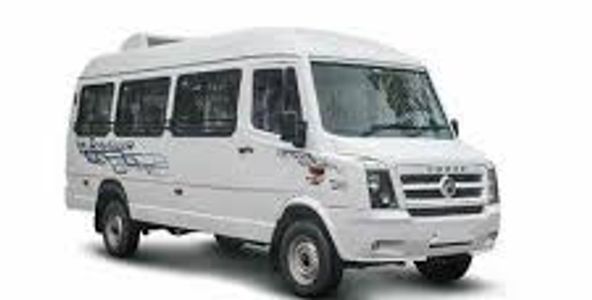
12 Seater Force Tempo Traveler
The Force Tempo Traveller 12-seater is a robust and versatile multi-purpose passenger vehicle built by Force Motors in India. Designed for carrying groups of people comfortably over city routes, tourist trips or corporate travel, it’s widely used for family outings, tours, school or office transport, and inter-city journeys thanks to its roomy interior and reliable mechanics.
At the heart of this vehicle is a 2.6-litre, 4-cylinder FM2.6 CR ED diesel engine that delivers around 115 hp of power and up to 350 Nm of torque, paired with a 5-speed manual synchromesh gearbox. This engine is known for its strong torque output and good fuel efficiency for its class, making it suitable for both city driving and long-distance touring. The Tempo Traveller typically returns a mileage around 17 km per litre under normal driving conditions.
The 12-seater layout offers comfortable seating for up to 12 passengers (plus driver), with generous headroom and legroom compared with smaller vans. Seating configurations can be set in different arrangements such as 2×1 or 2×2 layouts, and many vehicles provide reclining or high-back seats to improve comfort on extended trips. The cabin has ample luggage space at the rear to store bags and gear.
In terms of safety and build, the Force Tempo Traveller features a monocoque body structure for stability and rigidity. It includes power steering, seat belts for all passengers, ABS braking systems and a vacuum-assisted dual circuit brake setup for responsive stopping. Suspension uses semi-elliptical springs with hydraulic shock absorbers, helping ensure a relatively smooth ride even on rough surfaces.
While basic variants may come without air conditioning, many models are available with twin-blower AC systems for better cabin cooling. Entertainment and convenience options can include audio systems, USB/Bluetooth connectivity, and digital trip meters depending on the trim and custom fit-outs chosen
About Vehicles
17 Seater Force Tempo Traveler
The 17-seater Force Tempo Traveller is a large passenger van from Force Motors widely used in India for group travel, tourism services, school transport, corporate outings, and family trips. Its design focuses on comfortable seating, dependable performance and practical usability, making it one of the most sought-after options for transporting bigger groups over both city and highway terrains.
At the heart of the 17-seater Traveller is a robust diesel engine — typically a 2.6-litre FM2.6 CR ED unit that produces around 115 hp of power and about 350 Nm of torque. This engine is paired with a 5-speed manual gearbox and meets BS6 emission norms, helping the vehicle deliver dependable performance even when fully loaded. The Traveller’s powertrain is tuned to balance power with fuel efficiency for long-distance travel.
One of the key selling points of the 17-seater Tempo Traveller is its spacious and well-planned interior. It comfortably accommodates 17 passengers plus the driver, with generous headroom and legroom and options for reclining seats or push-back seats in some configurations. Many variants include a dual air-conditioning system with roof-mounted vents so that even passengers in the rear rows stay cool in hot weather — a big plus on long journeys.
Safety and build quality are strong points too. The Traveller’s monocoque body and reinforced frame offer good structural strength, while features like seat belts, ABS (anti-lock braking system), power steering and dual-circuit hydraulic brakes help ensure safety for everyone on board.
Other practical features often found in 17-seater configurations include multiple luggage racks or storage spaces, panoramic windows for good visibility, USB charging points, interior lighting and optional entertainment systems depending on custom fit-outs.
About Vehicles
26 Seater Force Tempo Traveler
The 26-seater Force Tempo Traveller is a large passenger van manufactured by Force Motors in India, designed to carry bigger groups comfortably and reliably over both city and highway journeys. It’s a popular choice among tour operators, corporate fleet owners, schools, event organisers and travel agencies for transporting large groups of people efficiently.
At the core of the Traveller 26 is a robust diesel engine — typically a FM 2.6 CR or FM 3.2 CR Common Rail diesel unit with around 115 hp of power and up to about 320–350 Nm of torque depending on the specific variant. This engine is paired with a 5-speed manual transmission that provides dependable performance even when the vehicle is fully loaded.
One of the defining features of the 26-seater is its monocoque body construction, which combines the body and frame into a single strong unit. This design enhances structural strength, improves safety and contributes to a smoother, more stable ride compared to traditional body-on-frame buses.
The interior is spacious and well-configured, with seating laid out in a 2×2 pattern to comfortably accommodate up to 26 passengers plus the driver. Seats are typically high-back recliners with ample legroom, headroom and optional features like armrests for enhanced comfort on longer trips. High roof and wide aisle space make movement inside easier, and overhead luggage racks or rear storage areas help carry bags and gear.
For comfort, many variants offer powerful dual air-conditioning with roof-mounted vents to keep all passengers cool, especially in hot climates. Large tinted windows with curtains improve visibility and reduce glare. Safety is supported by features like ABS with EBD, disc brakes on all wheels, power steering, seat belts for all seats, and options such as emergency exits and fire safety equipment.
About Vehicles
26 Seater Coach
A 26 Seater Coach is a mid-sized passenger bus designed for comfortable group transportation over short city routes or longer outstation trips. It strikes a balance between smaller vans and larger full-size buses, making it ideal for corporate travel, family tours, school excursions, wedding transfers, pilgrimages and airport transfers where seating for up to 26 people is needed without the size and cost of bigger buses.
Most 26-seater coaches are built on a diesel-powered chassis with a manual transmission, engineered to deliver dependable performance and fuel economy for commercial use. Engines typically meet modern emission standards and are sized to provide good torque for climbing roads and highway cruising. The coach body is fully built with a strong frame and suspension system designed to absorb bumps and provide stability — often including parabolic leaf springs, telescopic shock absorbers and anti-roll bars.
Seating & Comfort:
Inside, the coach usually features a 2×2 seating layout with high-back or push-back seats that offer generous legroom and headroom for all passengers. Many models provide individual reclining seats, adjustable armrests and ample cushioning for long journeys. For comfort in hot climates, air-conditioning with roof-mounted vents is commonly fitted so passengers from front to rear enjoy uniform cooling. Large tinted windows with curtains enhance comfort and visibility, while overhead luggage racks and rear boot space help store bags and gear.
Safety & Practical Features:
Safety features on a 26-seater coach typically include air brakes with ABS, power steering for easier handling, fire extinguisher and first-aid box, and sometimes emergency exit signage for quick evacuation if needed. Interiors often include LED lighting, reading lights, music systems, microphone for guides, and passenger grab handles to improve the onboard experience.
About Vehicles
35 Seater Coach
A 35 Seater Coach is a medium-sized passenger bus commonly used in India and elsewhere to transport larger groups comfortably for school outings, family tours, corporate trips, pilgrimages, weddings and inter-city travel. It’s larger than mini buses but more compact and manoeuvrable than big full-size buses, offering a balance of capacity, comfort and practicality.
Most 35-seater coaches are built on a diesel-powered commercial chassis with a manual transmission, engineered to deliver reliable performance and fuel efficiency for frequent use. The vehicle’s frame, strong suspension and stable braking systems help ensure a steady ride even on long highway stretches or rural roads.
Seating & Comfort:
Inside, a 35-seater coach typically features a 2×2 seating layout with push-back or reclining high-back seats that offer ample legroom and headspace for passengers throughout the journey. Many models provide wide aisles, padded upholstery and large tinted windows with curtains to enhance comfort and visibility.
Air-Conditioning & Climate:
Most modern 35-seater coaches come equipped with powerful air-conditioning systems with multiple overhead vents to circulate cool air evenly from front to rear. Some variants also offer heating systems for cooler climates, making them suitable for all-season travel.
Safety & Convenience:
Safety features are a priority in passenger coaches of this size. Common equipment includes ABS (anti-lock braking system) with EBD, seat belts (in many models), first-aid kit and fire extinguisher, power steering and emergency exits where required. Overhead luggage racks and rear compartments help keep personal bags and gear secure and organised.
Additional Features:
Depending on the coach model or service provider, passengers may also enjoy stereo or entertainment systems, LED interior lighting, microphone for announcements, USB charging ports, and GPS tracking—features that add convenience and comfort, especially on long trips.
In summary, a 35-seater coach combines ample seating capacity, comfortable ride quality, efficient diesel performance and useful safety & convenience features, making it an ideal choice for transporting medium-sized groups both within cities and across long distances
About Vehicles
49 Seater Coach
The 49 Seater Coach is a full-size passenger bus widely used in India for large-group travel, such as corporate outings, school or college trips, pilgrimages, wedding transportation, and long-distance tours. It is designed to provide maximum passenger capacity without compromising on comfort and safety, making it ideal for inter-city and highway journeys
These coaches are typically powered by robust diesel engines paired with manual transmissions, engineered to provide reliable performance and sufficient torque for handling full passenger loads over long distances. Modern 49‑seater coaches often meet BS6 emission standards, offering improved fuel efficiency and lower emissions. The strong chassis, reinforced frame, and advanced suspension system ensure a smooth and stable ride, even on uneven roads.
Seating & Comfort:
The interior is configured with a 2×2 seating layout to accommodate 49 passengers plus the driver, with high-back, reclining seats for enhanced comfort on long trips. Wide aisles allow easy movement, while large tinted windows with curtains provide good visibility and protection from sunlight. Many coaches feature overhead luggage racks and rear storage compartments for personal baggage.
Air Conditioning & Climate Control:
Most 49-seater coaches come equipped with centralized air-conditioning systems and roof-mounted vents to distribute cool air evenly throughout the cabin. This ensures passenger comfort even in hot climates, making them suitable for long-distance travel.
Safety & Features:
Safety is a priority in full-sized coaches. Standard features include ABS with EBD, seat belts in many models, emergency exits, fire extinguisher and first-aid kit, and power-assisted steering for better handling. Many buses also offer LED lighting, audio systems, USB charging ports, GPS tracking, and microphone systems for announcements and onboard convenience.